Thinking about adding a backyard home in San Jose to create space for family or generate rental income? You are not alone. Many homeowners see ADUs as a smart way to add flexibility and value, but questions about rules, costs, and timelines can make the first step feel big. In this guide, you will learn what counts as an ADU in San Jose, how the permitting path works, what projects typically cost, and which design choices pay off. You will also get a practical checklist to start your feasibility review with confidence. Let’s dive in.
What counts as an ADU in San Jose
An accessory dwelling unit is a secondary housing unit on the same lot as an existing home. It has the features needed to function as an independent residence, including a kitchen and bathroom, along with code-compliant access and egress. In San Jose, state rules set the foundation while the City applies local, objective standards.
A Junior ADU, or JADU, is a smaller option that is usually created within the existing home footprint. JADUs are often up to about 500 square feet under state law and typically share some systems with the main house. Local rules can include owner-occupancy requirements for JADUs, so you should confirm current standards before you plan.
Common ADU types you will see across San Jose:
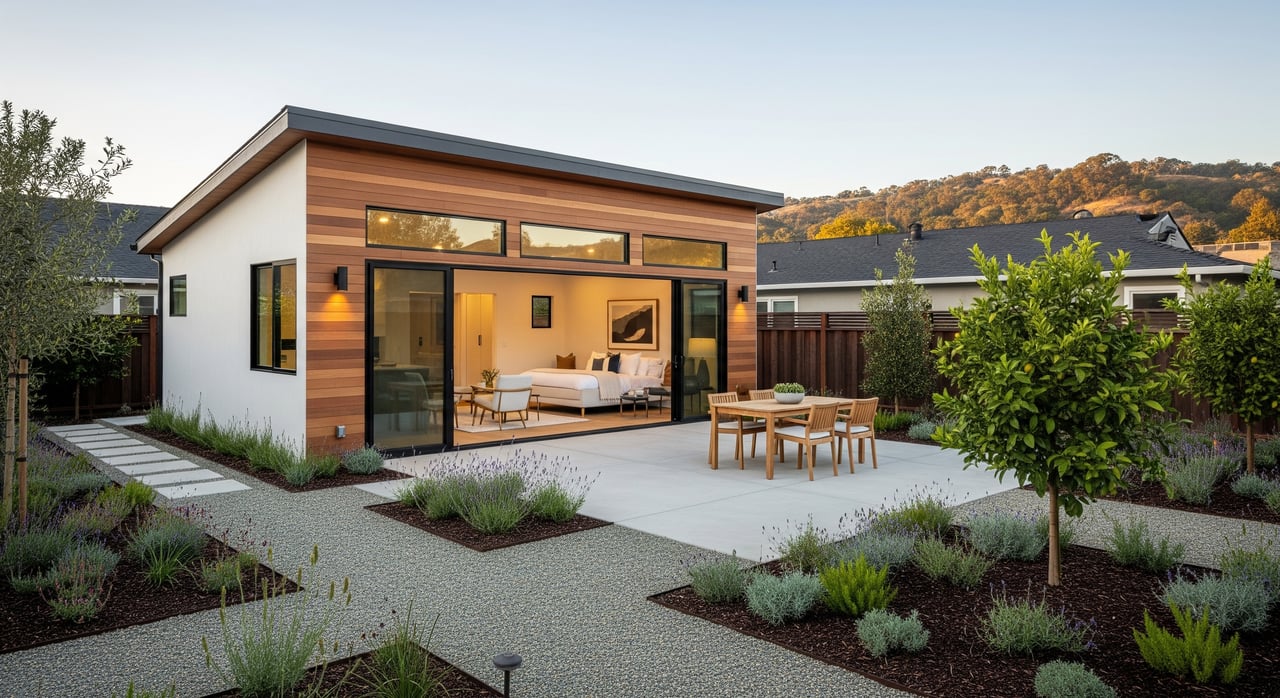
- Detached ADU: A new backyard cottage or a unit over a garage, fully separate from the main house.
- Attached ADU: An addition connected to the primary home with a separate entrance.
- Conversion ADU: A garage conversion or a conversion of interior space such as a basement, attic, or accessory structure.
- JADU: A small interior conversion, often with a kitchenette, carved from existing space.
Many California cities, including San Jose, align with state law that allows detached ADUs up to 1,200 square feet, with smaller caps for JADUs. Exact size, height, and placement rules depend on your lot and ADU type, so check current City standards for your property.
A few distinctions to keep in mind:
- ADU vs guesthouse: An ADU must meet code for an independent dwelling unit. A room without a full kitchen or bathroom may not qualify.
- Utilities: ADUs may share utility connections with the main house or require new or upgraded service. Sewer and water connection needs vary by project.
- Rentals: ADUs can be rented in San Jose. If you are considering short-term rentals, the City has registration requirements and rules you must follow.
San Jose rules and permitting at a glance
State law simplifies ADU approvals for projects that meet objective standards. San Jose applies those standards through a ministerial review, which means no discretionary hearing when you comply with the rules. Here is how the path typically unfolds.
The streamlined path, step by step
- 1. Preliminary feasibility: Confirm your zoning, lot coverage, setbacks, and whether your property is in a special overlay such as a historic district, hillside area, or floodplain. Identify easements and the number of existing units on the lot.
- 2. Pre-application check: Request guidance from City planning staff or use City checklists to verify what you can build and the documents you will need.
- 3. Prepare plans: Create a site plan, floor plans, elevations, and utility plan. Include structural details for conversions and any required tree or landscape plans.
- 4. Planning intake: Submit for objective standard review. If your ADU meets the standards, the City processes it ministerially.
- 5. Building permits: Apply for building permits covering structural, electrical, plumbing, and mechanical scopes. Other departments, such as Public Works and Fire, may also review.
- 6. Construction and inspections: Build after permits are issued. City inspections occur during construction and at final occupancy.
- 7. Recordation and registration: Some projects involve affidavits or local registrations. If you plan to offer short-term rentals, complete the required City registration and business licensing.
Requirements that can add review
- Setbacks, height, and trees: Side and rear setback allowances are often reduced for detached ADUs, but lot lines, slopes, or protected trees can add reviews or require grading plans.
- Parking: State rules limit when parking can be required. In some cases, one space is required unless exemptions apply, such as proximity to transit or certain conversions.
- Utilities: New service or upgrades to sewer and water can affect both cost and permit scope. Stormwater management may be required for some sites.
- Fire and life safety: Egress, hydrant proximity, and sprinkler requirements vary by building type and context.
- Historic districts and HOAs: Historic overlays and HOA covenants can influence design and feasibility. Check these early.
Timelines you can expect
State law seeks to expedite ADU approvals, but real timelines vary based on project complexity, plan quality, and department workload. For projects that meet objective standards, many homeowners see approval within a few weeks to a few months after submitting a complete application. Conversion ADUs generally move faster than detached new builds. Construction duration ranges widely and depends on size, access, and contractor capacity.
What an ADU costs in San Jose
Building in the Bay Area comes with premium labor and material costs, so set a realistic budget that includes contingencies. Use the following ranges as early guidance, then confirm with local bids.
Typical ranges by ADU type
- Garage or interior conversion: Usually the most cost-effective path, with totals often ranging from the low five figures up to the mid six figures depending on scope and structure.
- Attached ADU: Mid-range, typically more than simple conversions but less than a detached new build.
- Detached new construction: Highest cost category. Final price varies based on size, finishes, site work, and utility needs.
Treat these as ballpark ranges for early planning. Actual numbers depend on plans, site conditions, and vendor pricing.
Biggest cost drivers
- ADU type and size: Larger footprints and additional bathrooms add cost.
- Site complexity: Sloped lots, tight access, major trenching, and retaining walls increase budgets.
- Foundation and structure: Reinforcement for garage slabs or new foundations can be significant.
- MEP upgrades: New sewer laterals, water service or meter changes, and separate HVAC or electrical services add cost.
- Fees: Permit, plan check, and utility connection fees apply. Some capacity or impact fees may also apply depending on your project.
- Finish level: Durable rental-grade finishes reduce upkeep, while high-end finishes increase the build cost.
- Labor market: Bay Area labor rates and busy schedules can push pricing up.
Soft costs and ongoing costs
- Soft costs: Architecture and engineering, structural calcs, soils or civil reports if required, permits and inspections, utility hookup fees, and any tree protection measures.
- Ongoing costs: Utility bills, property tax adjustments based on improvements, insurance updates, and maintenance. If you rent the unit, budget for leasing costs and potential property management.
Financing options to explore
- Cash or a cash-out refinance.
- Home equity line of credit or home equity loan.
- Construction loans or ADU-focused products from local lenders.
- Mortgage refinancing that includes ADU construction.
- Grants or pilot programs offered by local agencies or nonprofits. Availability changes over time, so check current programs.
Smart design choices that pay off
Good design boosts livability, safety, and rental appeal. Start with how you plan to use the unit, then tailor features to that goal.
For multigenerational living
- Accessibility first: Zero-step entry, wider doors, clear turning space, and walk-in showers with reinforced walls for future grab bars.
- One-level living: Avoid interior steps where possible.
- Privacy and comfort: Separate entrance, sound insulation, and landscape screening between units.
- Shared vs separate: Decide if laundry or outdoor spaces will be shared. Some families add an internal door for semi-independent living.
- Safety: Night lighting, non-slip surfaces, and handrails where needed.
For rental income
- Durable finishes: Choose materials that stand up to tenant use and simplify turnover.
- Efficient layout: Open-plan kitchen and living, with in-unit laundry if space allows.
- Privacy: Separate entry and sound attenuation matter for tenant satisfaction.
- Parking and storage: A clear parking plan, bike storage, and a small private outdoor area increase appeal.
- Utilities: Consider separate metering if you plan to pass utility costs to tenants.
- Short-term rentals: San Jose has registration and rules for short-term rentals. Confirm details before you commit to this strategy.
Features that boost usability and value
- In-unit laundry, even a compact stackable set.
- Full kitchen with sensible storage and countertop space.
- Natural light through well-placed windows and doors.
- Efficient HVAC, often with mini-split systems in compact spaces.
- Small patio, porch, or yard to extend the living area.
San Jose ADU feasibility checklist
Use this checklist to organize your first-round research. Many items require confirmation with City staff and vendor partners.
Risks and tips to avoid delays
- Plan for utilities and site work: Sewer laterals, meters, stormwater, and retaining walls are common budget surprises.
- Check HOA and overlays early: Historic or HOA restrictions can alter designs or timelines.
- Design to objective standards: Plans that miss local standards risk added reviews and delays.
- Mind short-term rental rules: If STRs are part of your plan, confirm requirements before you design.
- Invest in complete plans: Quality drawings and code-compliant details reduce back-and-forth in plan check and inspections.
- Plan for operations: If renting, budget for management, maintenance, and insurance adjustments.
What to do next
- Start with a quick feasibility scan of zoning, setbacks, utilities, and overlays.
- Talk with City planning staff or review City checklists to confirm what fits on your lot.
- Sketch a needs-based program: multigenerational or rental, ideal size, and must-have features.
- Get two or more local contractor or design-build bids to validate budget and timeline.
- Review financing and talk with your insurance agent and tax advisor about impacts.
If you want a local perspective on how an ADU could support your goals, from multigenerational living to rental income, connect with a neighborhood-focused team that knows San Jose’s process and property types. Reach out to Milestone Realty for a friendly strategy session tailored to your lot, budget, and timeline.
FAQs
What is the difference between an ADU and a JADU in San Jose?
- An ADU is a full independent unit with a kitchen and bathroom, while a JADU is a smaller unit created within existing space that often shares systems with the main house and is typically limited to about 500 square feet under state law.
Do I need to provide parking for my ADU in San Jose?
- Parking rules are limited by state law, and exemptions apply in many cases, such as proximity to transit or certain conversions; confirm your site-specific requirement during feasibility.
How long does permitting and construction take for an ADU in San Jose?
- For projects that meet objective standards, approvals can take a few weeks to a few months from a complete submission, with conversion projects generally faster; construction timelines vary by size and complexity.
Can I use my ADU for short-term rentals in San Jose?
- Short-term rentals are regulated in San Jose and require registration and compliance with local rules, so verify current requirements before planning this use.
Will building an ADU increase my property taxes in Santa Clara County?
- The County may reassess your property based on the value of the improvement, which can increase property taxes; verify details with the assessor’s office.
Do HOAs or historic districts affect ADU feasibility in San Jose?
- Yes, HOA covenants and historic overlays can add design constraints or approvals, so review them early to avoid redesigns and delays.