Market Outlook: Greater Bay Area Real Estate – March 2026
A selective market shaped by low inventory, steady rates, and localized trends. As we move deeper into 2026, the Greater Bay Area housing market continues to gain momentum — but not evenly. While national trends point to improving affordability, local conditions tell a more competitive and supply-constrained story.
Quick Take (National Market)
- Median home prices are flat year-over-year
- Inventory is slightly higher, but the gap is narrowing
- Existing home sales have declined, signaling buyer hesitation
The Big Story: Lower Rates, But Measured Activity
Mortgage rates continue to trend downward:
- Average 30-year rate: ~6.16%
- Down from 6.91% last year (~11% decrease)
- Median monthly payment: $1,959
- Down from $2,127 last year
- Approximately $168/month in savings
What this means:
- Affordability is improving
- Buyers have more purchasing power
- But many are still waiting for additional rate movement
Home Prices: Stabilizing, Not Surging
- Median home price: $396,800
- +0.86% year-over-year
- -2.05% month-over-month
The market has settled into a holding pattern:
- Lower rates are helping
- Buyer caution is offsetting upward pressure
Inventory: Gradually Improving
- New listings: 362,180 (February)
- +2.41% year-over-year
- +10.01% month-over-month
- Total inventory: 1.22M homes
Takeaway:
- More listings are entering the market
- Buyers have slightly more options
- Inventory is still below balanced levels
Buyer Behavior: Still Cautious
- Existing home sales: 3.91M
- -4.4% year-over-year
- -8.43% month-over-month
Even with improved affordability:
- Buyers are taking their time
- Many are waiting for clearer signals
- Seasonal patterns are also contributing
Market Outlook (National)
- Inventory may continue to build
- Buyer activity could increase if rates drop further
- The market could shift quickly depending on rate movement
The Local Lowdown: Bay Area Market
While national trends appear steady, the Bay Area tells a more competitive story.
Quick Take (Bay Area)
- Strong price growth in select counties
- Inventory remains severely constrained
- Single-family homes are selling quickly
- Sellers continue to hold the advantage
- Condo market offers more flexibility for buyers
Pricing Trends: Highly Localized
Strong growth:
- San Francisco: +21.41% YoY (single-family)
- Marin County: moderate decline but still high price levels
- Select counties showing resilience
More moderate or declining areas:
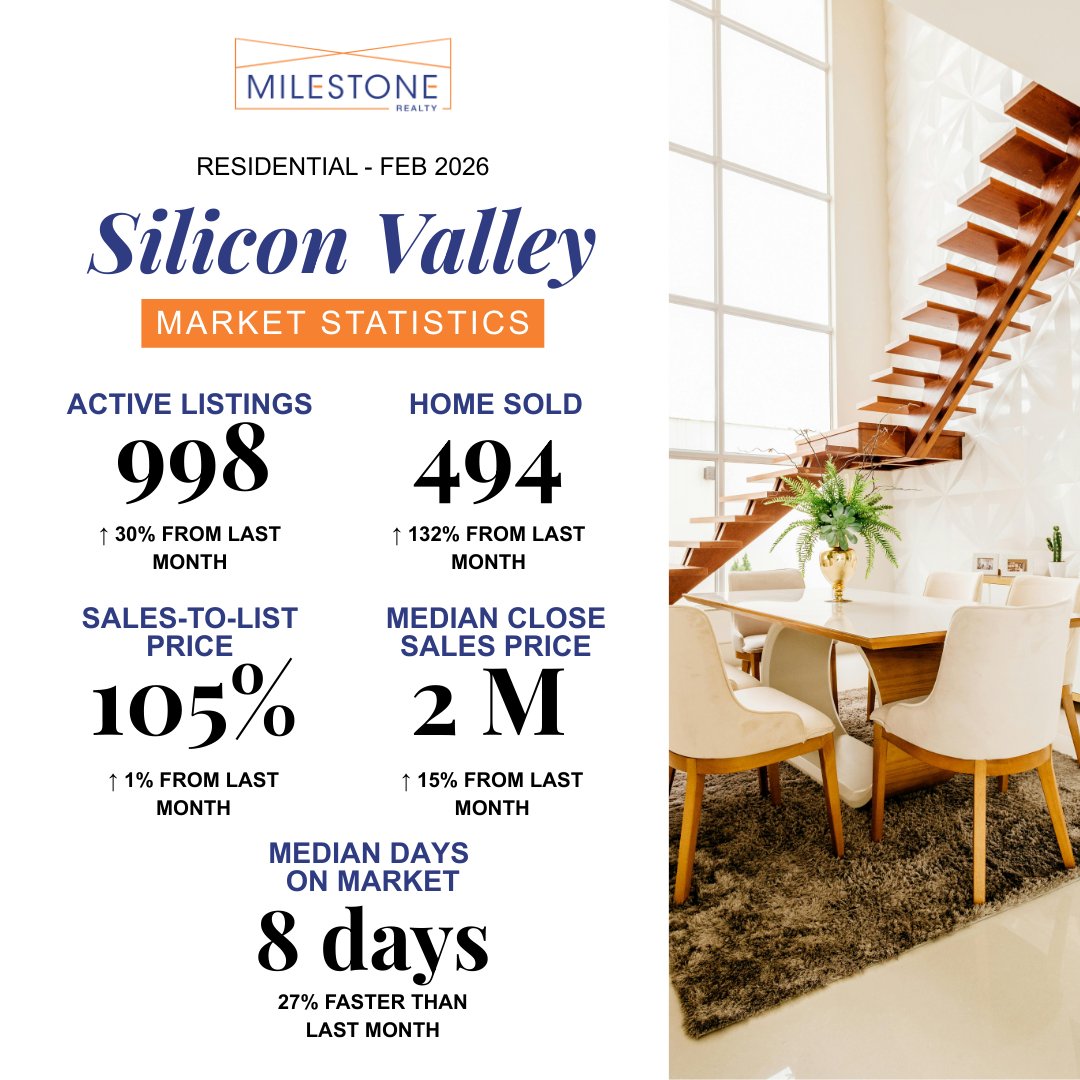
- Santa Clara County: ~flat at $2M
- San Mateo County: -8.24% YoY
- Napa County: -20.86% YoY
Condos:
- Mixed performance
- Declines in many counties
- Select areas showing gains (e.g., Contra Costa)
Key takeaway:
- The market is no longer moving in one direction
- Outcomes depend heavily on location and property type
Inventory: Still the Defining Constraint
- North Bay: -47.88% YoY
- San Francisco: -37%+ YoY
- Silicon Valley: -12% YoY
- East Bay: -14% to -21% YoY
San Francisco:
- Fewer than 550 homes available citywide
What this means:
- Supply remains extremely limited
- Competition persists for desirable homes
- Pricing remains supported by low inventory
Speed of the Market
Single-family homes:
- Santa Clara County: 8 days
- San Mateo County: 11 days
- San Francisco: 12 days
- East Bay: under 2 weeks
Condos:
- Santa Clara County: +21% longer YoY
- Santa Cruz County: 84 days on market
- Marin County: +231% increase in days on market
Key takeaway:
- Single-family homes remain highly competitive
- Condo market is significantly slower
Market Conditions (Months of Supply)
- San Francisco: 0.8 months
- Santa Clara County: 1.1 months
- San Mateo County: 1.1 months
- Most counties: under 2 months
Benchmark:
- 3 months = balanced market
Conclusion:
- The Bay Area remains a seller’s market, especially for single-family homes
- Condo market is closer to balanced in some areas
What This Means Right Now
We are seeing a split market:
Homes that are winning:
- Properly priced
- Well-prepared
- Strategically marketed
Homes that are struggling:
- Overpriced
- Poorly positioned
- Not aligned with buyer expectations
Final Takeaway
The market is not slowing — it is becoming more precise.
- Buyers are more selective
- Sellers must be more strategic
- Inventory remains the key driver
In today’s market:
Strategy matters more than timing.
Thinking About Your Next Move?
Whether you’re buying, selling, or simply staying informed, understanding how these trends apply to your specific area is essential. A well-informed strategy will always outperform guesswork.