West San Jose vs Cupertino for Everyday Living
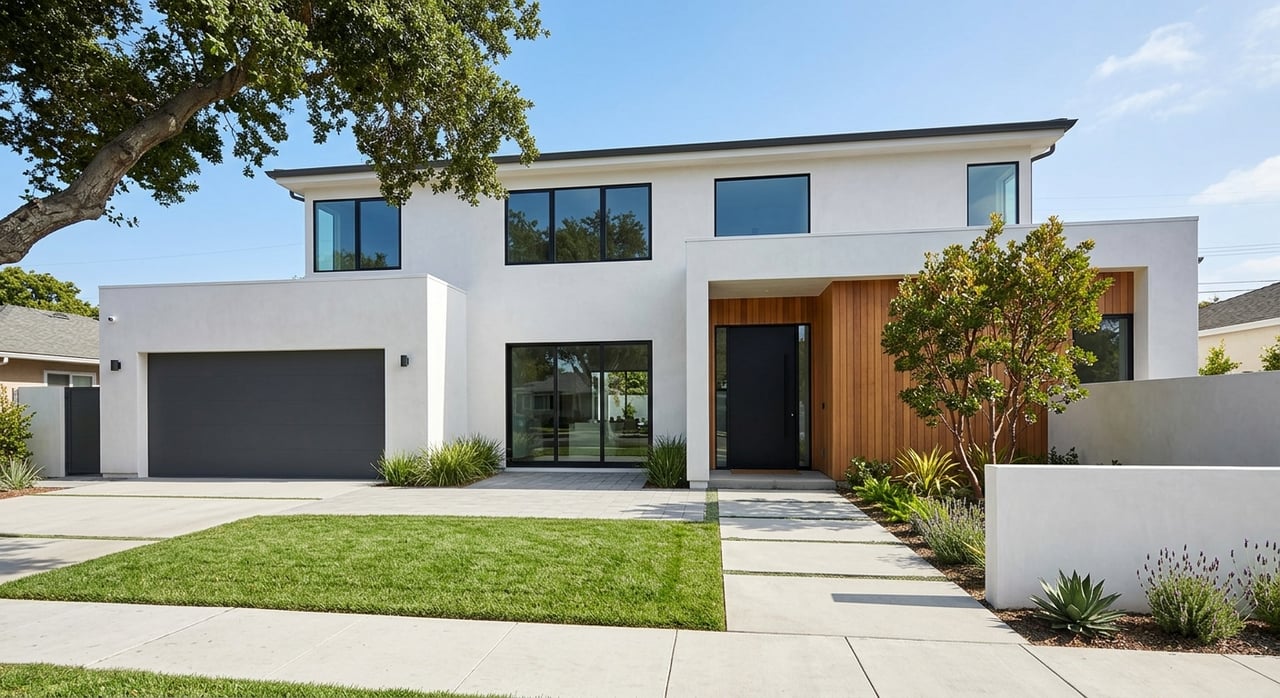
Trying to choose between West San Jose and Cupertino? You are not alone. Both put you close to Silicon Valley jobs, shopping, and everyday conveniences, but they can feel very different once you picture your actual routine. If you are weighing commute patterns, home prices, neighborhood setting, and how daily life might feel, this guide will help you compare the two in practical terms. Let’s dive in.
The biggest difference between West San Jose and Cupertino is not just the city line. It is how each place tends to function day to day.
West San Jose is best understood as a corridor-based part of San Jose rather than one compact central district. City planning materials describe a mix of commercial corridors, shopping plazas, offices, single-family neighborhoods, and apartments, especially around key routes like Saratoga Avenue and Stevens Creek Boulevard.
Cupertino reads differently in its planning documents. The city emphasizes distinct neighborhoods, stronger neighborhood centers, and connections for walking and biking between homes, parks, shopping areas, and other daily destinations.
If you want the short version, West San Jose often feels like corridor convenience with more mixed uses, while Cupertino feels like residential cohesion with a higher price tag. That framing lines up closely with how both communities are described in official planning and housing documents.
If commute time shapes your quality of life, this is one of the easiest places to start. Census data reports a mean travel time to work of 27.3 minutes for San Jose and 23.6 minutes for Cupertino.
That does not mean Cupertino will automatically give you a faster commute. Your actual drive or transit trip will depend on your workplace, your route, and where in each area you live. Still, the citywide benchmark gives you a useful baseline when comparing everyday convenience.
The Stevens Creek Boulevard corridor matters in both places. San Jose’s corridor vision study identifies Stevens Creek as a major artery connecting housing, commercial areas, and job centers from West San Carlos near Diridon Station to Highway 85, including destinations such as Santana Row, Valley Fair, Apple headquarters, and Main Street Cupertino.
That means both West San Jose and Cupertino benefit from being tied into one of the South Bay’s most important east-west corridors. If your routine includes office commutes, shopping stops, or meeting friends across multiple nodes, that connection can be a real advantage.
VTA serves both communities. Along the Stevens Creek corridor, Route 23 and Rapid 523 run through Cupertino and West San Jose, while Route 61 serves the Bascom and San Carlos corridor near Good Samaritan. Bascom Light Rail Station is also in San Jose.
If public transit is part of your weekly routine, West San Jose may give you slightly more reason to study route placement carefully because of its corridor-based layout. In Cupertino, the experience may feel more centered around connecting residential neighborhoods to a smaller number of major retail and employment nodes.
For many buyers, the biggest practical difference comes down to budget. Both West San Jose and Cupertino are competitive Silicon Valley markets, but the gap between them is large.
Zillow reports an average home value of $2.21 million in West San Jose, with a median sale price of $1.82 million in March 2026. In Cupertino, Zillow reports an average home value of $3.18 million and a median sale price of $3.32 million in the same period.
On the median sale price metric, Cupertino is about $1.50 million higher than West San Jose, or roughly 82% higher. That is not a small pricing difference. It can completely change what type of home, lot size, or renovation level you can realistically target.
Both markets also move quickly. Zillow reports homes going pending in around 11 days in West San Jose and around 13 days in Cupertino, which shows that buyers should expect competition in either location.
If you are trying to maximize buying power while staying in this part of the Valley, West San Jose will usually offer more room to work with. That does not make it inexpensive, but it can open up more options relative to Cupertino.
If your top priority is a more consistently residential setting and you are comfortable paying a premium for it, Cupertino may still be the better fit. The key is to match your budget to the kind of daily environment you actually want, not just the name of the city.
Cupertino’s housing element says 83% of houses in the city are valued above $1 million, with an estimated average market value of $2.25 million. The same document says 57% of Cupertino housing units are single-family, while multifamily units account for 21% and attached units for 12%.
That supports the broader picture many buyers already sense when they tour the area. Cupertino remains heavily shaped by single-family neighborhoods, even as some parts of the city, especially east of Highway 85, have grown more urban with multifamily development near major boulevards.
West San Jose presents a more mixed physical pattern. San Jose planning pages describe shopping plazas, offices, apartments, and single-family neighborhoods existing side by side, especially along Saratoga Avenue and other major commercial corridors.
This difference matters because it affects what you see and feel on a normal Tuesday, not just on an open-house weekend. In Cupertino, your daily environment may feel more consistently neighborhood-oriented. In West San Jose, your daily life may be shaped more by access to mixed-use corridors and shopping clusters.
A neighborhood can look good on paper and still feel wrong once real life starts. That is why errands, quick dining runs, and weekend movement matter so much.
In West San Jose, city planning materials identify major retail destinations such as Westgate Shopping Center, Westgate West, and Santana Row in the broader area. The Saratoga Avenue corridor is described as largely commercial and auto-oriented, with strip malls, office uses, and shopping areas next to residential pockets.
That setup can work very well if you like being near multiple commercial stops and want easy access to established shopping corridors. You may find that your lifestyle naturally revolves around major streets and retail nodes rather than one defined downtown center.
Cupertino has a different structure. The city’s adopted budget highlights Main Street and Nineteen800 as part of a vibrant downtown area, while The Marketplace remains a long-time retail anchor and Cupertino Village includes 99 Ranch Market. The city also points to a wide variety of restaurants and cafes along Stevens Creek and nearby streets.
West San Jose may fit you better if your ideal routine is built around fast access to a broad commercial spine. That can be especially appealing if you are often on the move and want several retail and dining options spread across nearby corridors.
Cupertino may fit you better if you prefer a more residential base with concentrated retail nodes. In that setup, errands can feel a little more anchored to distinct centers rather than dispersed across a larger corridor network.
This is where the choice often becomes clear. Even if two homes are similar on paper, the setting around them can shape your satisfaction over the long term.
West San Jose is often a strong match for buyers who want to stay close to Stevens Creek, Saratoga, and West San Carlos, want more price flexibility than Cupertino offers, and do not mind a more mixed corridor environment. It is practical, connected, and well positioned for people who value convenience.
Cupertino is often a better match for buyers who want a stronger sense of neighborhood continuity, a city planning philosophy centered on preserving distinct neighborhoods, and a housing stock that remains strongly single-family in character. That comes with a significant premium, but for some buyers the setting justifies the cost.
Neither option is universally better. The right choice depends on whether you want your daily life to feel more connected to major corridors and retail access or more grounded in a cohesive residential setting.
| Factor | West San Jose | Cupertino |
|---|---|---|
| General feel | Corridor-based, mixed-use, convenience-oriented | More residential, neighborhood-centered |
| Commute baseline | San Jose mean travel time: 27.3 minutes | Cupertino mean travel time: 23.6 minutes |
| Home pricing | Lower relative cost, still competitive | Significantly higher pricing |
| Median sale price | $1.82 million | $3.32 million |
| Housing pattern | Mix of single-family, apartments, offices, retail | Heavily single-family with distinct neighborhoods |
| Retail pattern | Shopping corridors and major retail destinations | Concentrated retail nodes and downtown-style centers |
If you are still torn, stop thinking in city labels and start thinking in routines. Ask yourself where you want to spend your weekdays, how much flexibility you need in your budget, and whether you want a more mixed corridor setting or a more consistently residential environment.
It also helps to compare not just listing photos, but the areas around those homes. Drive the commute route, visit the nearest shopping area, and notice whether the setting feels like it fits your normal life.
In a market this competitive, clarity matters. The more precisely you define the lifestyle you want, the easier it becomes to narrow your search and move quickly when the right home appears.
If you are comparing West San Jose and Cupertino and want practical, neighborhood-level guidance, Milestone Realty can help you weigh lifestyle, pricing, and market strategy so you can make a confident move.
Stay up to date on the latest real estate trends.

October 22, 2026
What a Home Inspection Can and Cannot Tell You Before You Buy

October 21, 2026

October 15, 2026
October 8, 2026

October 1, 2026

September 24, 2026
September 22, 2026
September 22, 2026
A More Selective Market
September 17, 2026
You’ve got questions and we can’t wait to answer them.