Mountain View's Parking Lots Are Disappearing. Here's What's Filling the Gap
In the last weekend of August, someone tried to book a movie at Century 16 and couldn't get a ticket past September 24. They posted about it on Nextdoor. By that Monday, three employees had told a Mountain View Voice reporter the theater was closing for good, and corporate wouldn't confirm anything on the record. The rumor sat unresolved for two and a half weeks.
Then, on September 16, Cinemark's landlord answered it. Syufy Enterprises, the company that built the theater in the first place and sold it to Cinemark back in 2006, announced it's taking the site back and reopening it before the holidays. Cinemark is still leaving the Shoreline Boulevard multiplex on September 24, exactly as that first ticket window suggested. It just won't stay dark. That reversal, playing out over the past three weeks, is a small version of a much bigger pattern in Mountain View right now. The city keeps losing the things that made downtown easy to park at and easy to take for granted, and something new keeps showing up in the gap before residents finish adjusting to the loss.
Syufy's vice president of marketing, Tony Maniscalco, put it plainly to the Voice when the reversal was announced:
"It's all happening very fast. Basically, we're taking it back after 20 years."
The theater will be rebranded and is expected to reopen ahead of the December holiday season, with details on the timeline promised for October. What Maniscalco couldn't answer yet is what happens after that. Syufy filed planning documents back in 2023 for the 15.86-acre site that includes the theater, proposing 1,914 residential units, a 100,000-square-foot fitness center, 20,000 square feet of ground-floor retail, and new public streets running through the property. When asked in September whether that project is still moving forward, Maniscalco said he wasn't sure of its status.
So the theater isn't closing. But the land under it is still zoned, on paper, for a very different future. That's not a contradiction. It's how most of Mountain View's built environment is behaving this year: nothing gets simply removed, it gets renegotiated, sometimes twice in the same month.
The clearest version of that renegotiation isn't happening at a theater. It's happening every Sunday at the farmers market.
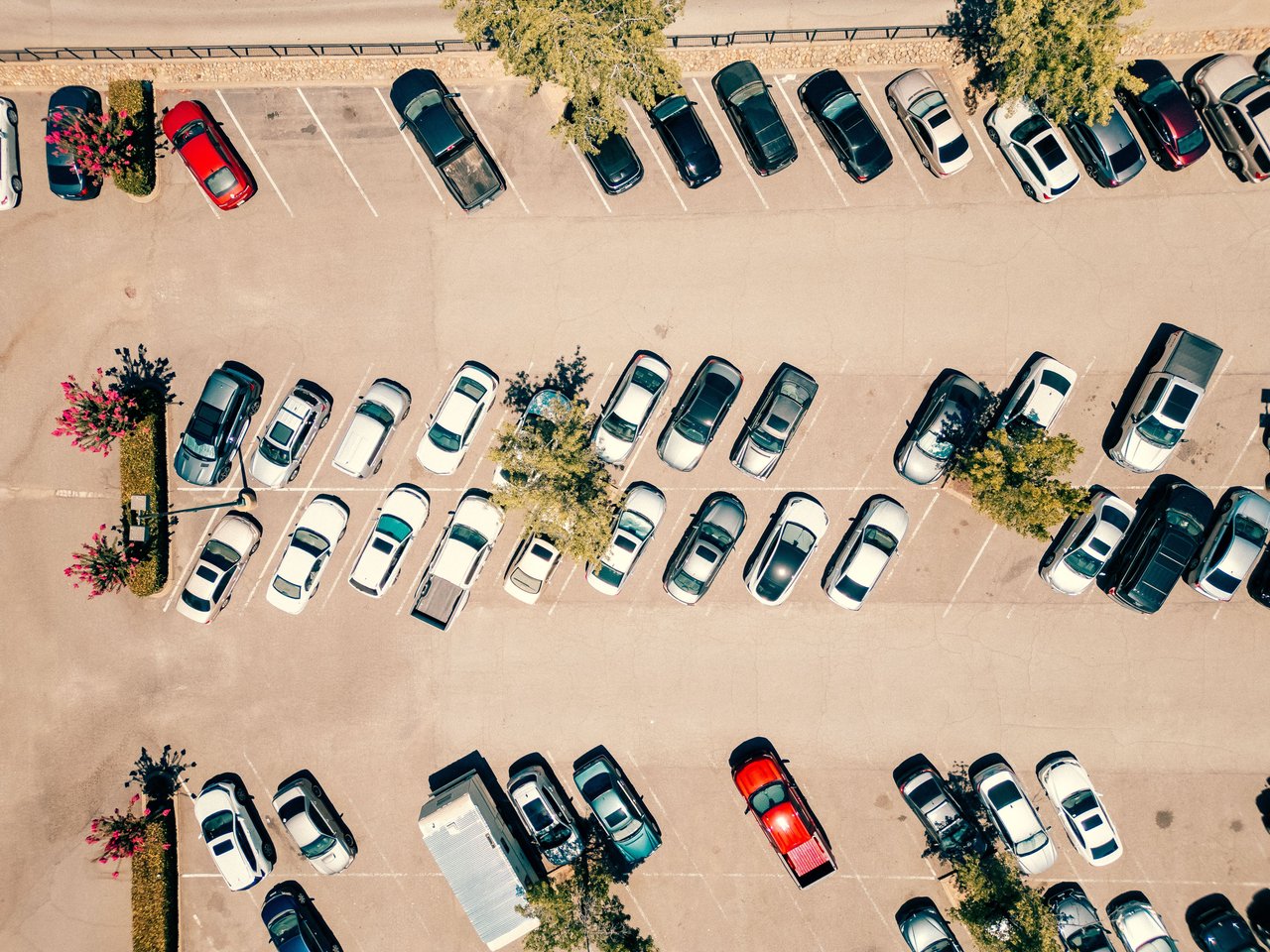
The Mountain View Farmers' Market has run out of the Caltrain station lot at 600 West Evelyn Avenue for decades, drawing more than 100 vendors most weeks. But that lot isn't always available. On 49ers home game Sundays, the market has long shifted a few blocks over to Lot 12, near City Hall, to free up parking for fans catching light rail to Levi's Stadium. That workaround is now permanently gone. Lot 12 closed to make way for a five-story affordable housing building, with construction beginning early this year. The city's backup plan was to shift the market to Lots 4 and 8 on Hope Street instead, and it's paying $430 per event for the privilege.
That backup plan has an expiration date too. Back in 2016, the city selected a developer, RGC Mountain View, to turn Lot 4 into a hotel and Lot 8 into an office building with ground-floor retail. If that project moves forward, the city will need to find yet another temporary home for the market, according to its own council reporting.
This fall, residents can already see the pattern on the calendar. The market is scheduled to relocate off its home lot and over to Hope Street on September 27, October 4, November 8, November 29, and December 13. Show up at the Caltrain lot expecting vendors on one of those Sundays and you'll find an empty parking lot instead.
None of this is a story about one lost lot. It's what happens when a downtown's surface parking, the flat, cheap, easy-to-convert kind, becomes the most valuable undeveloped land in the city. Every lot that made driving downtown simple is, one at a time, becoming a building.
The city isn't just losing parking passively. It's also actively rebuilding downtown around people who arrive on foot, and it's said so out loud.
This fall, Mountain View launched a pilot Makers Market on the 300 block of Castro Street, running four Friday afternoons into evening: September 18, October 23, November 20, and December 18, from 2 to 8 p.m. Amanda Rotella, the city's economic vitality manager, explained the timing and the motive to local reporters when the pilot was announced:
"COVID was really hard on downtowns. There's been a slow return to work, and there's just less foot traffic that comes downtown."
The 300 block was chosen specifically because it has more open space than other stretches of the pedestrian mall, where restaurants have already claimed the sidewalk for outdoor tables. Booth space is free for vendors, deliberately lowering the barrier for small makers who can't afford pricier craft fairs. Rotella was straightforward about the sequencing she's hoping for: shop the market, then walk next door for dinner, timed to land "right around the happy hour time frame."
It's a market built, in other words, to solve a problem the city has already diagnosed: fewer office workers, fewer casual downtown visits, and a pedestrian mall that needs a reason to pull people in on a random Friday rather than relying on habit alone.
Here's the part that complicates the idea that downtown needed rescuing. By the time the city rolled out its own foot-traffic strategy, a wave of independent restaurants had already bet on Castro Street without waiting for a pilot program.
Read together, these aren't chain expansions chasing a trend. They're operators who already knew the street, tried something, and in at least one case failed and pivoted rather than leaving. That's a different kind of evidence than a city press release. It's proof the foot traffic thesis was already working before anyone put a name on the strategy.
The clearest proof that Castro Street can already pull a crowd came earlier this month. The 55th annual Mountain View Art & Wine Festival took over the corridor September 12 and 13, drawing its usual mix of art booths, wine tasting, and live music to the same pedestrian mall that will host the Makers Market pilot in the months ahead. The festival didn't need a foot-traffic strategy. It's had one for 55 years.
What's ahead is smaller in scale but worth tracking if you live nearby: the Makers Market returns October 23, November 20, and December 18, and the farmers market keeps bouncing to Hope Street on the dates above whenever its usual lot gets claimed for something else. Century 16 is set to go dark September 24 and, if Syufy's timeline holds, come back under new management before Christmas.
None of these are separate stories. They're the same story, told in a parking lot, a movie theater, and a strip of restaurants that got there early. Land in Mountain View that used to sit flat and empty, whether under cars or under a matinee crowd, keeps getting reconsidered for something denser. Some of what gets built in its place will be housing. Some of it will be office space nobody asked for. And some of it, at least this fall, is turning out to be a Friday night market and a plate of turshu two blocks from where you used to park.
If you're watching how a neighborhood like this changes, block by block and lot by lot, that's exactly the kind of texture worth paying attention to. Milestone Realty keeps a close eye on what's actually happening in Mountain View and the rest of Silicon Valley, not just what the listings say. If you're curious what any of this means for a property you own or one you've had your eye on, reach out for a free home valuation or a conversation about the neighborhood.
Stay up to date on the latest real estate trends.
October 8, 2026
October 1, 2026
September 24, 2026
September 22, 2026
September 22, 2026
A More Selective Market
September 17, 2026

September 15, 2026
September 10, 2026
September 3, 2026
You’ve got questions and we can’t wait to answer them.