July 2026 Greater Bay Area Housing Market Update
The housing market gained momentum in June as home prices reached their highest level in a year, buyer activity improved, and available inventory began to level off.
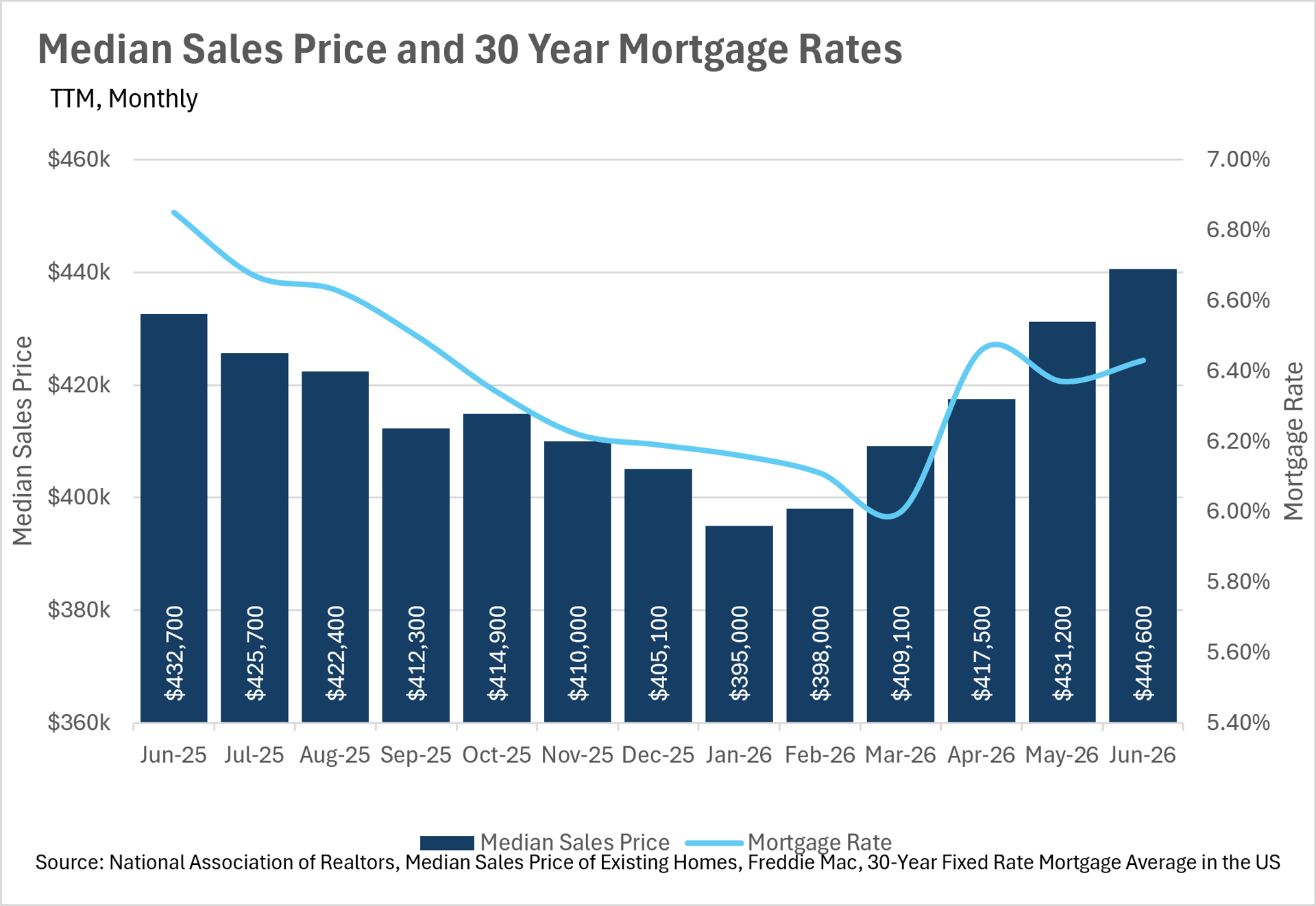
Nationally, the median home sale price climbed to $440,600, up 2.18% from May and 1.83% from a year ago. It was the fifth consecutive month of price growth, signaling that the spring rally remained intact heading into summer.
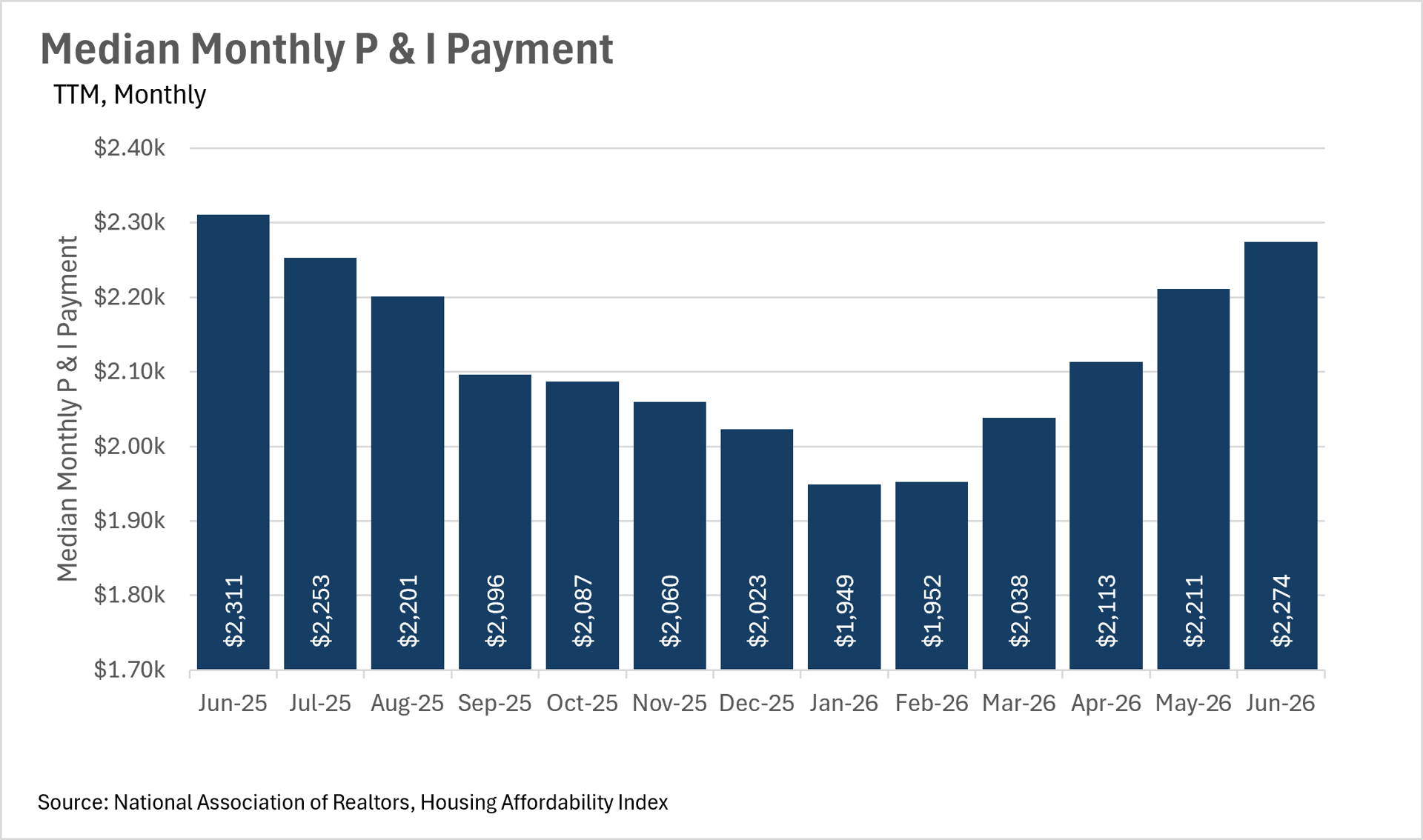
At the same time, affordability is becoming more challenging. Mortgage rates increased slightly to 6.43%, pushing the estimated monthly principal and interest payment to approximately $2,274—more than $300 higher than it was in January.
National home prices continued their spring climb in June, while 30-year mortgage rates remained in the mid-6% range.
The estimated monthly principal and interest payment has increased by more than $300 since January as home prices moved higher.
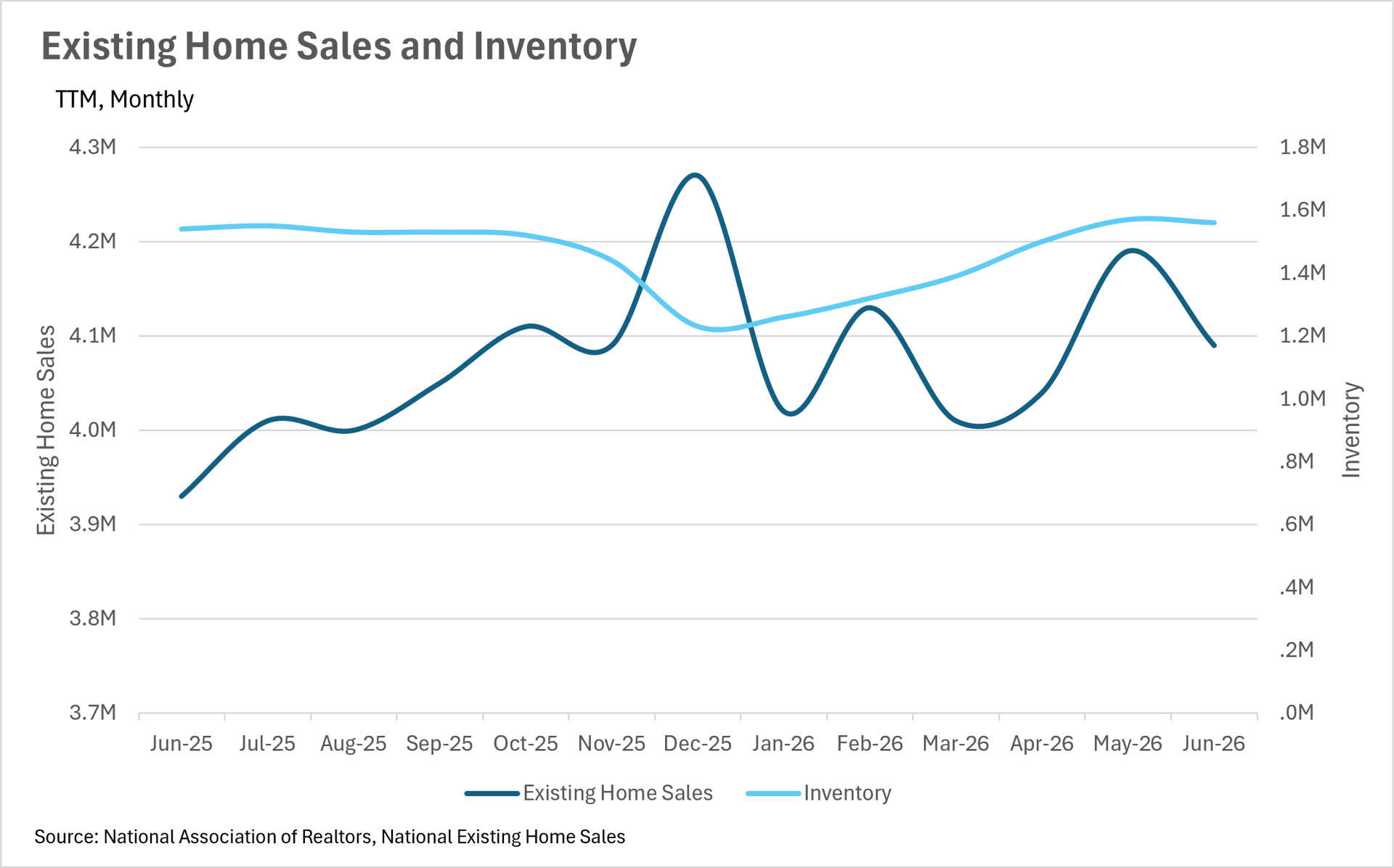
Existing-home sales improved from last year, while total inventory leveled off heading into summer.
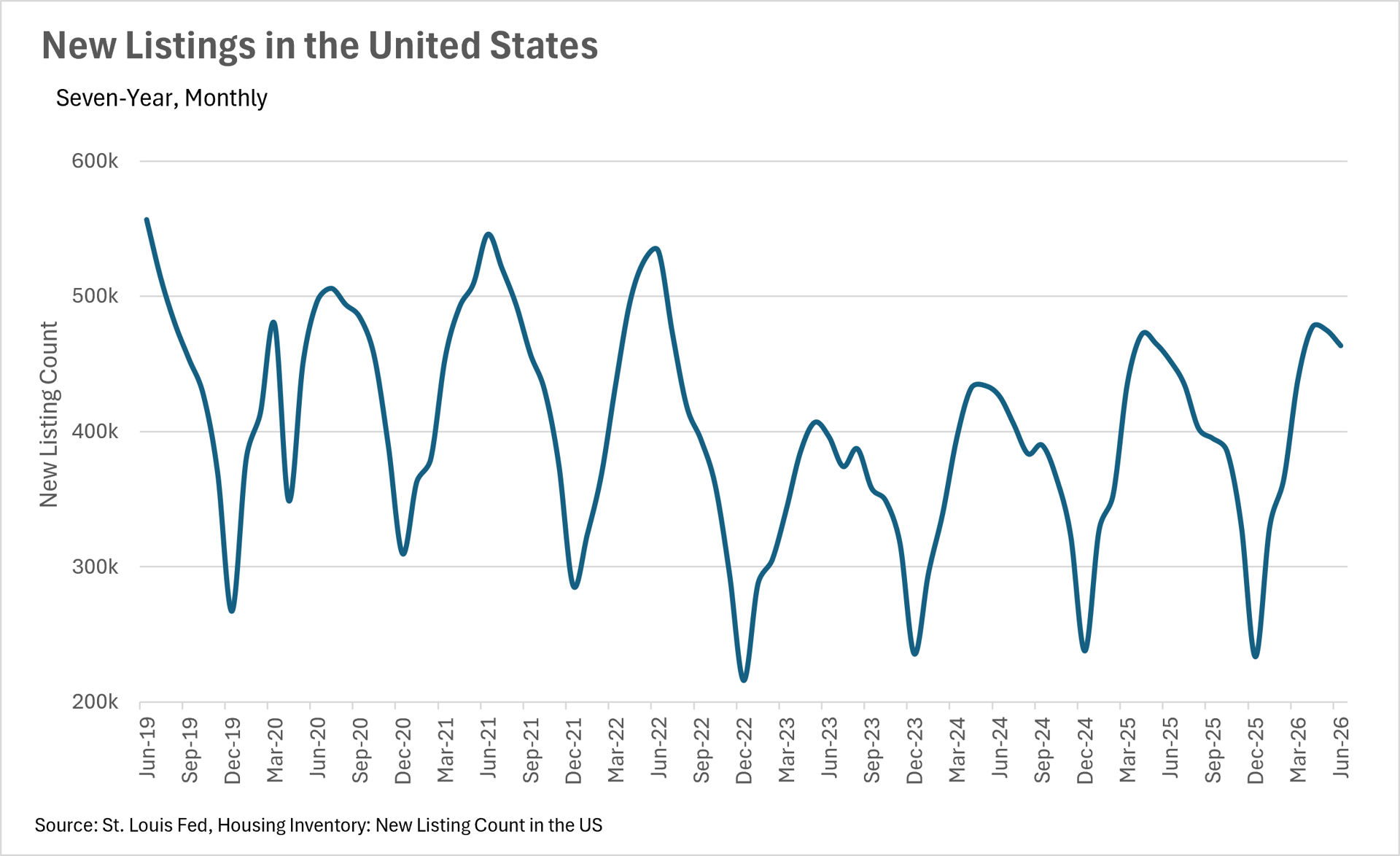
New listings remained above last year’s level but declined from May, suggesting that the spring increase in supply may be losing momentum.
Across the Greater Bay Area, the story is more competitive. Single-family home inventory has fallen sharply in many counties, allowing well-positioned properties to sell quickly and often above their asking prices.
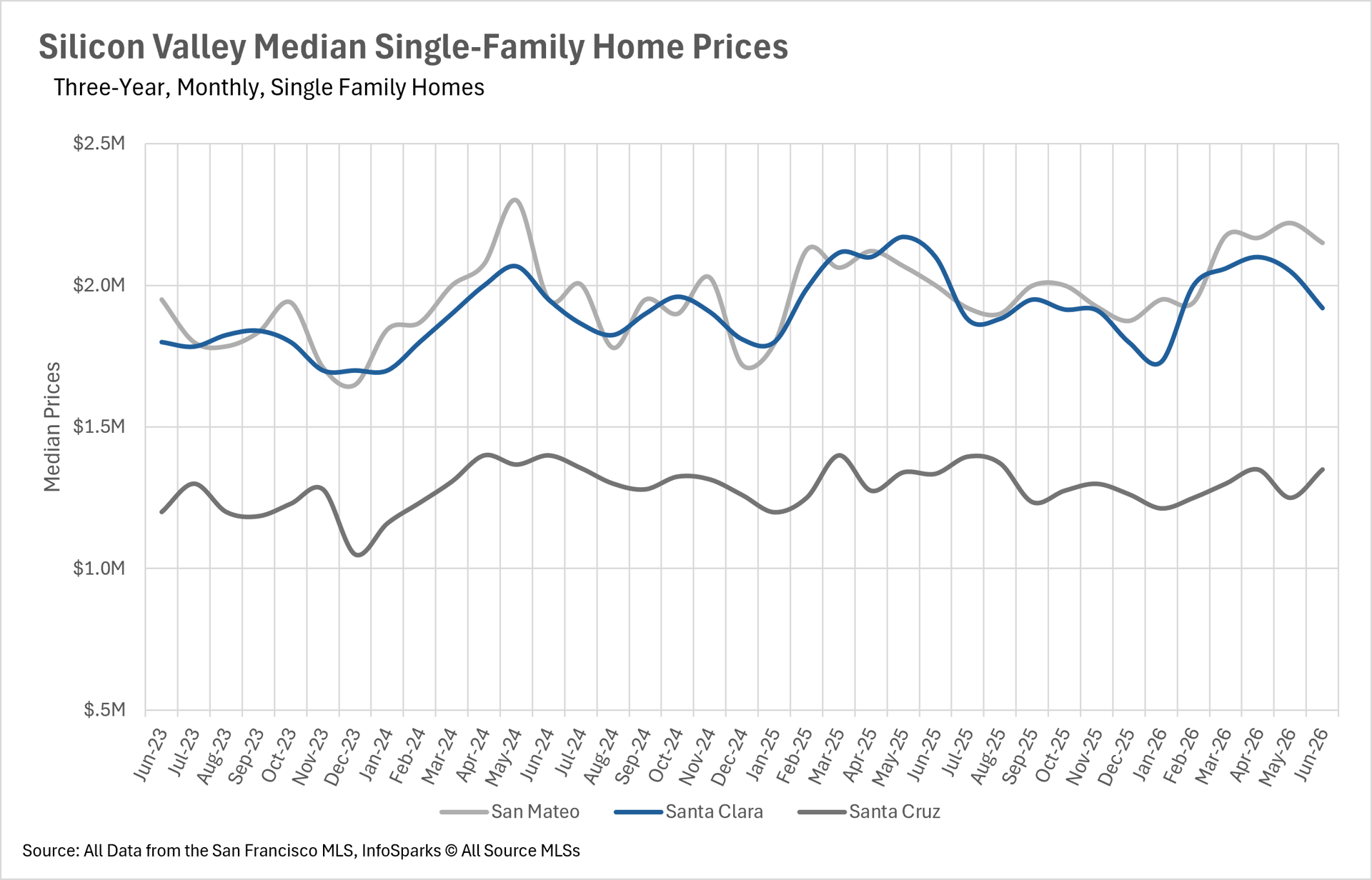
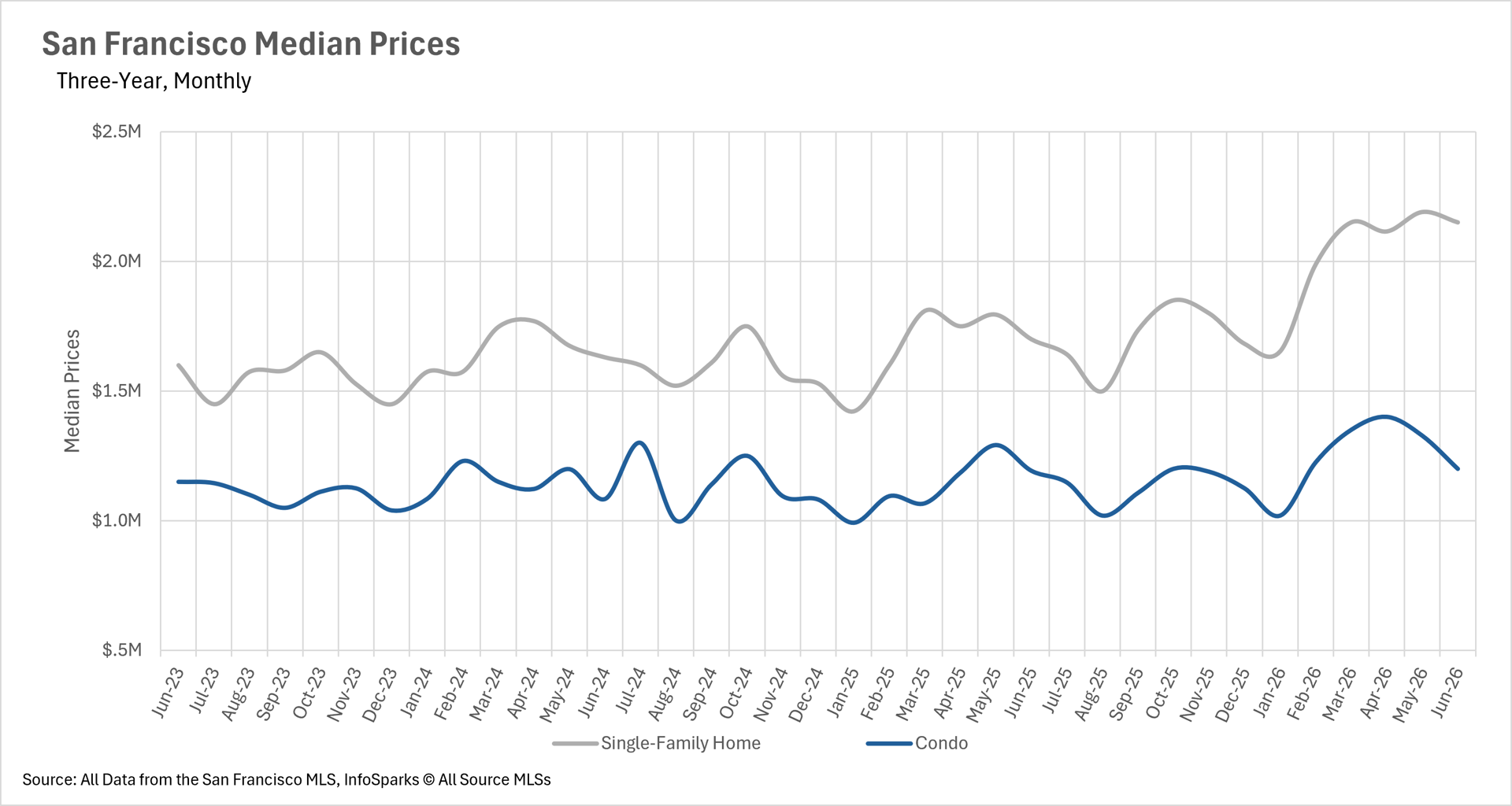
San Francisco recorded the strongest annual price growth, with the median single-family home price rising 26.47% to $2.15 million. San Mateo County reached the same median price after a 7.50% year-over-year increase.
Santa Clara County moved in the opposite direction, with its median price declining 8.57% to $1.92 million. However, homes continued to sell in approximately 12 days, showing that buyer demand remains strong despite the change in median pricing.
Silicon Valley pricing remained mixed, with San Mateo County gaining while Santa Clara County recorded a year-over-year decline.
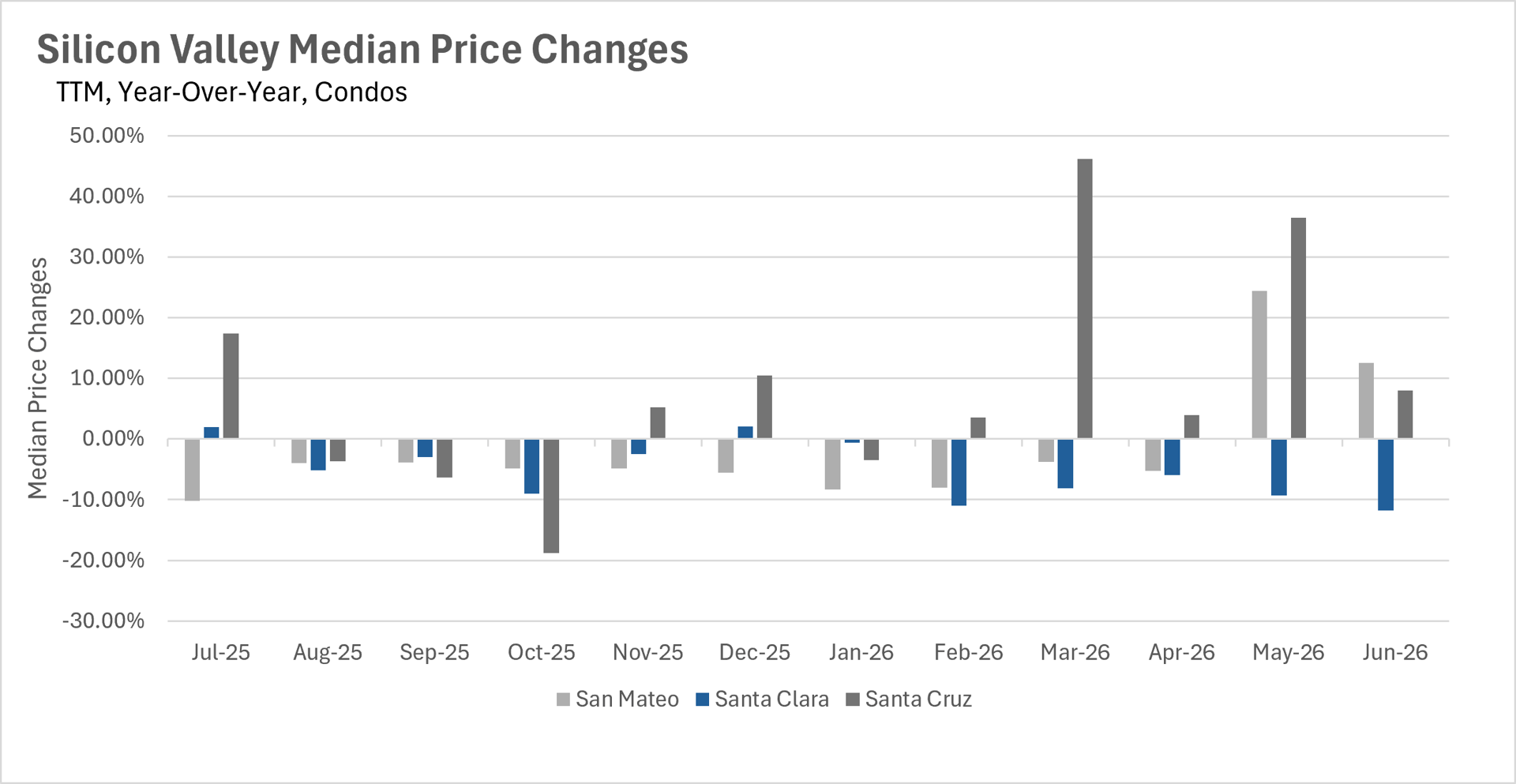
Year-over-year price performance varied significantly by county and property type.
San Francisco posted the region’s strongest annual single-family price growth in June.
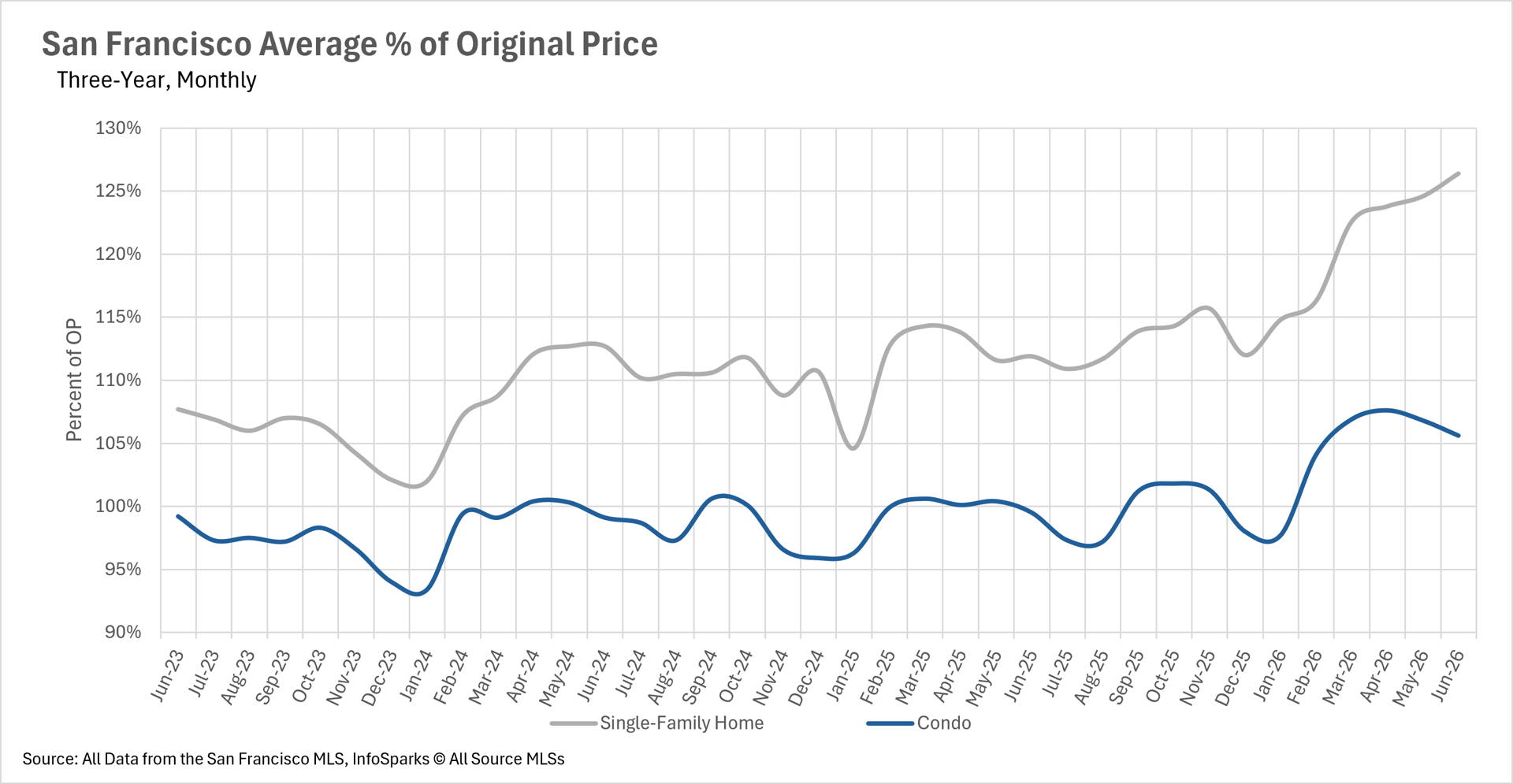
Strong competition pushed San Francisco single-family home sales well above their original asking prices.
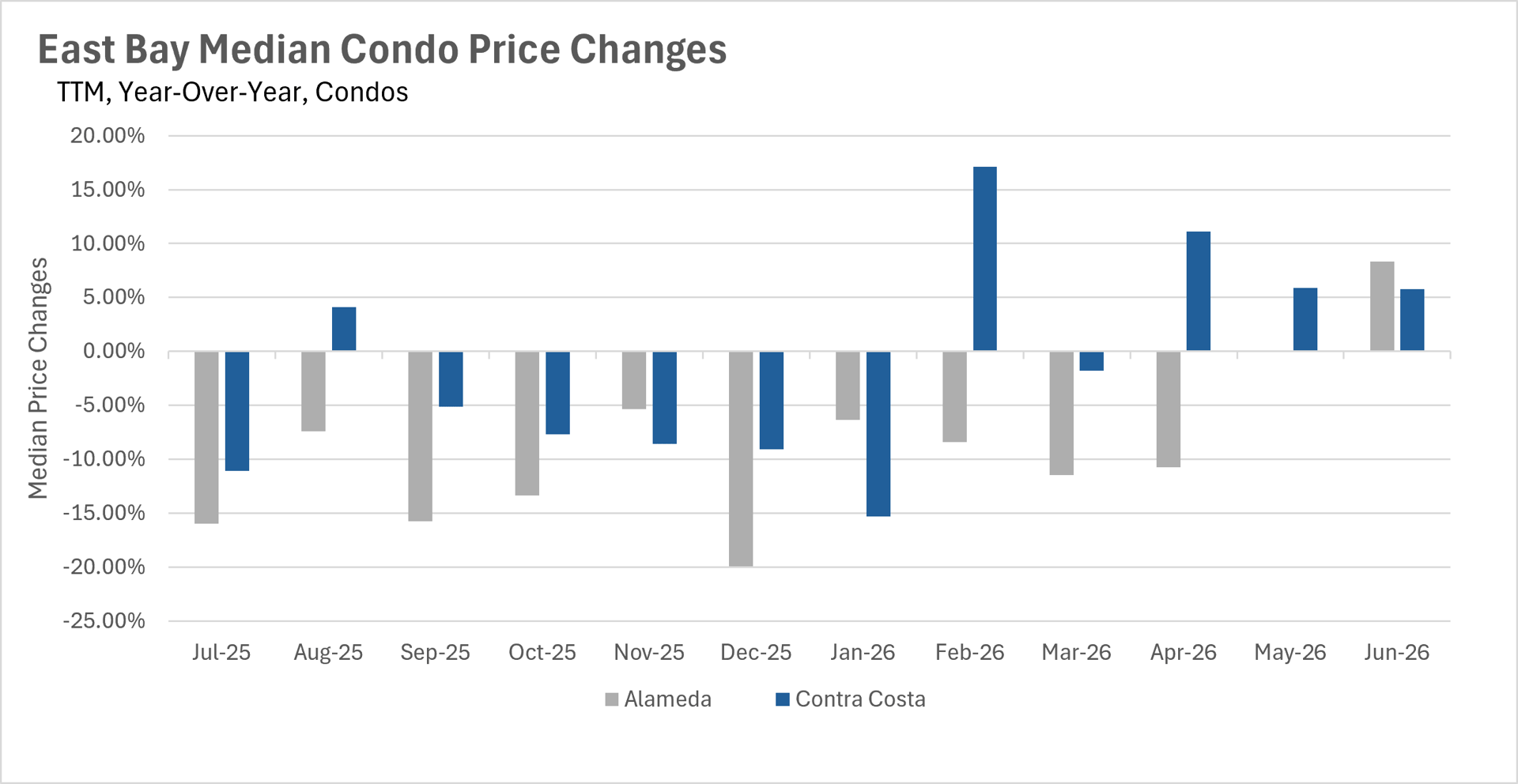
East Bay condo prices rebounded after several months of weaker year-over-year performance.
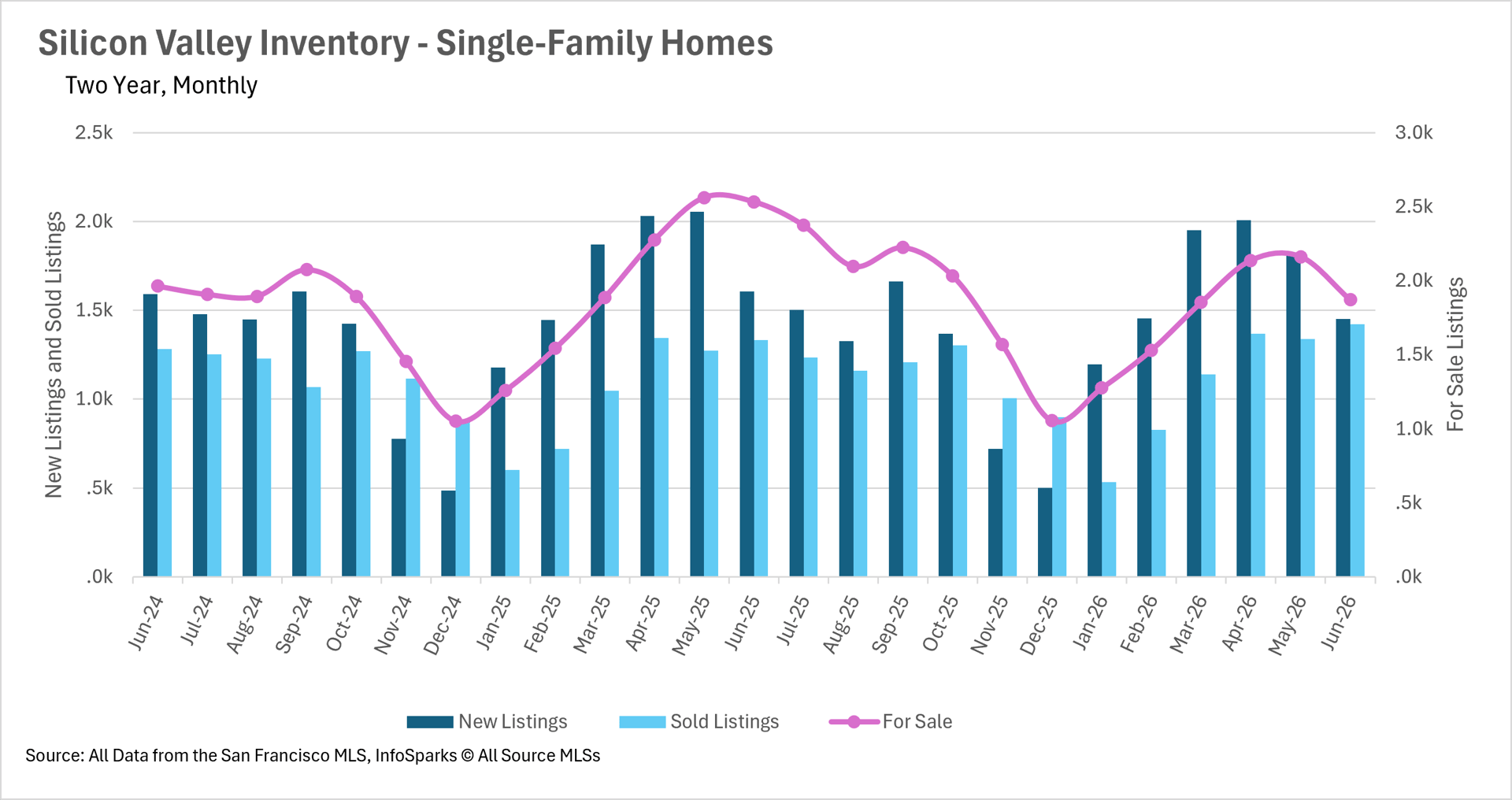
Silicon Valley single-family home inventory remains significantly below last year’s level, limiting buyers’ choices.
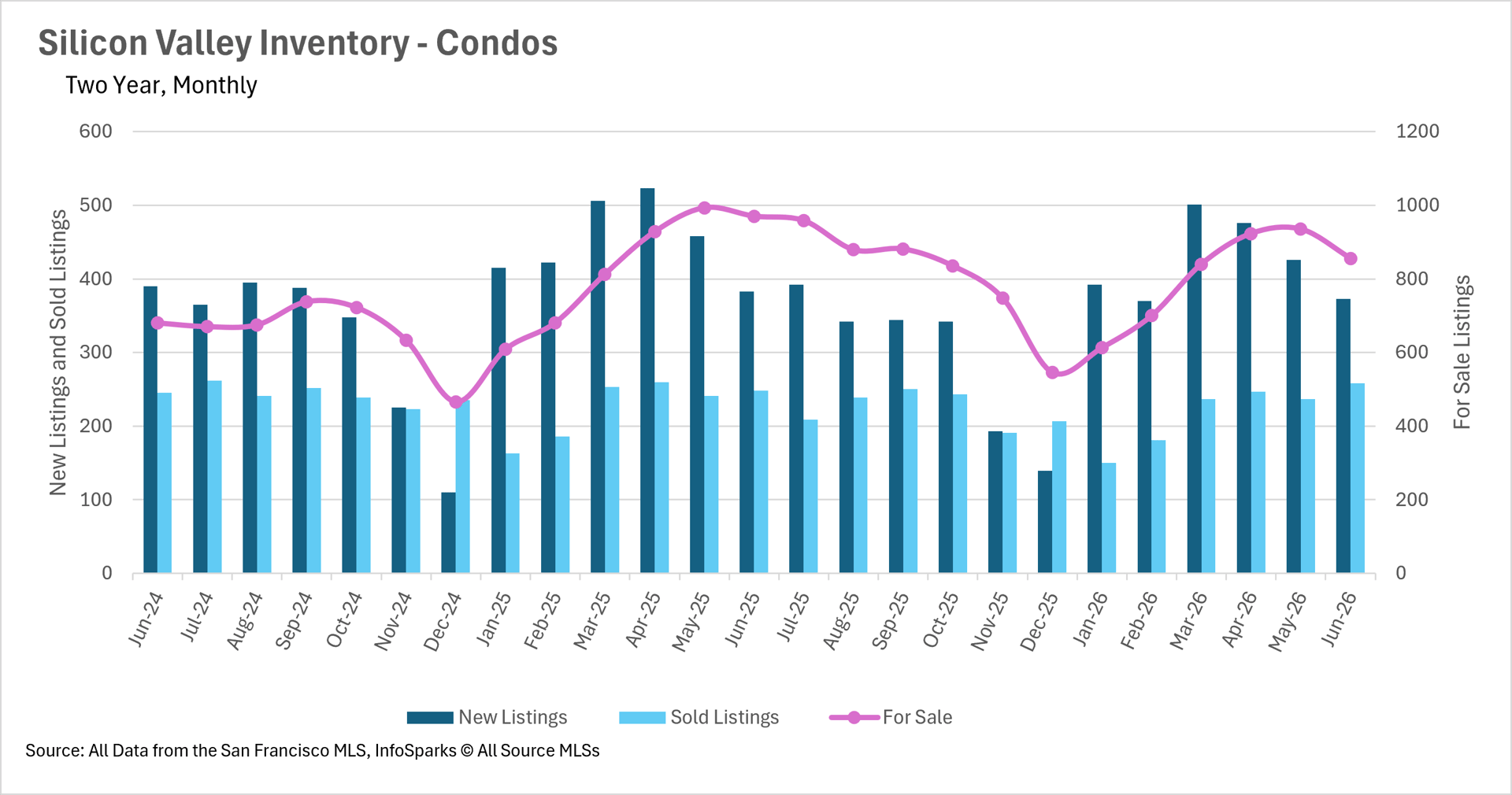
Condo inventory has also tightened, although buyers generally have more choices than they do in the single-family market.
The strongest force shaping the Bay Area market is the lack of available homes.
San Francisco single-family inventory fell nearly 60% year over year, leaving only 135 homes available for sale. Single-family inventory also declined more than 26% in Silicon Valley and the East Bay, while the North Bay recorded a drop of nearly 33%.
Sales activity has remained resilient despite the limited selection. Silicon Valley single-family sales increased 6.91% from last year, while North Bay sales rose more than 11%.
This means buyers are absorbing new inventory almost as quickly as it enters the market.
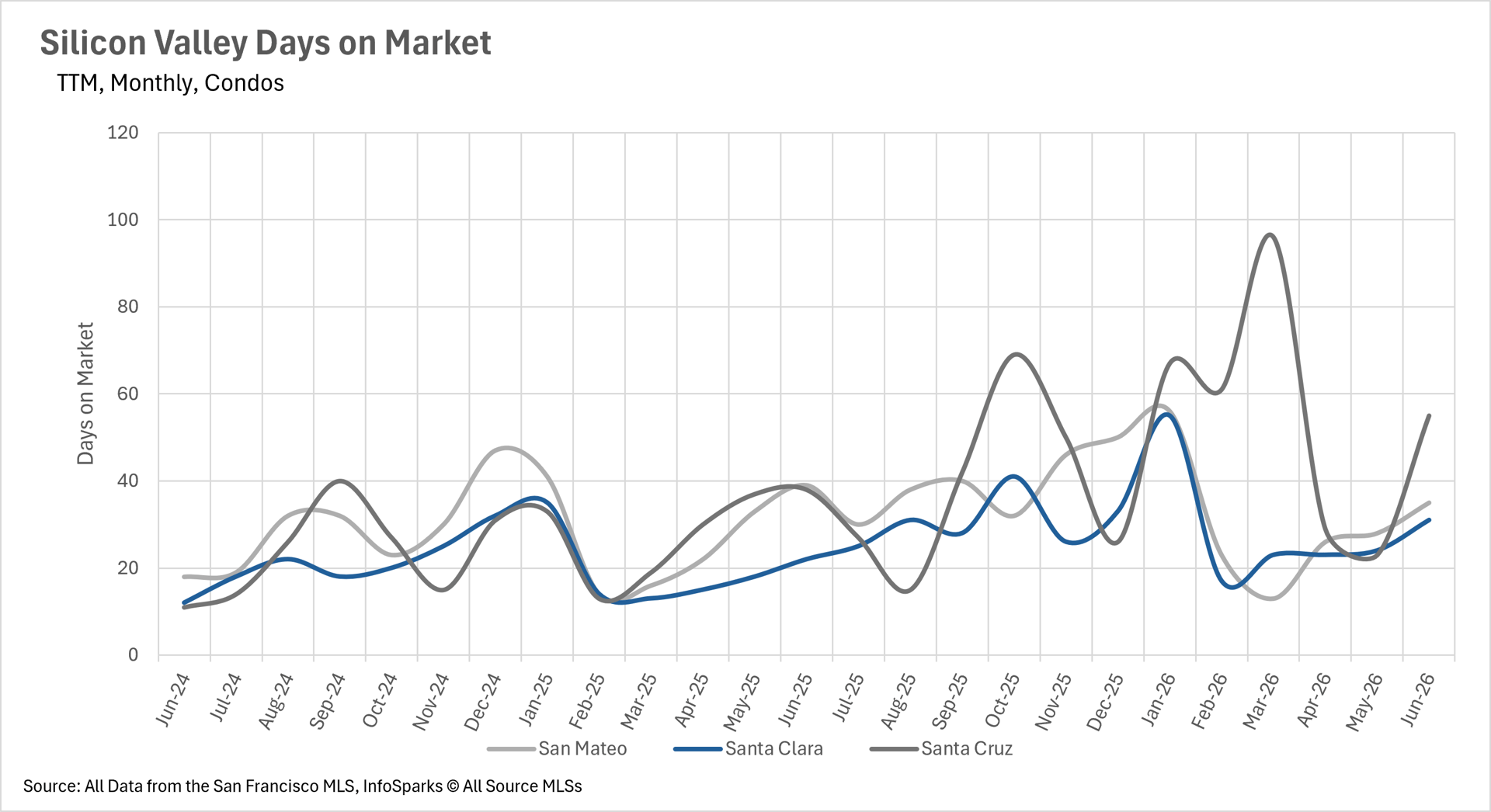
Single-family homes are moving in approximately two weeks or less throughout much of the region:
The speed of the market shows that buyers are prepared to act decisively when the right home becomes available.
However, countywide figures are benchmarks, not guarantees. Pricing, condition, location, presentation, and marketing strategy continue to influence how quickly an individual property sells.
Single-family homes continue to sell quickly across Silicon Valley, particularly when they are properly priced and presented.
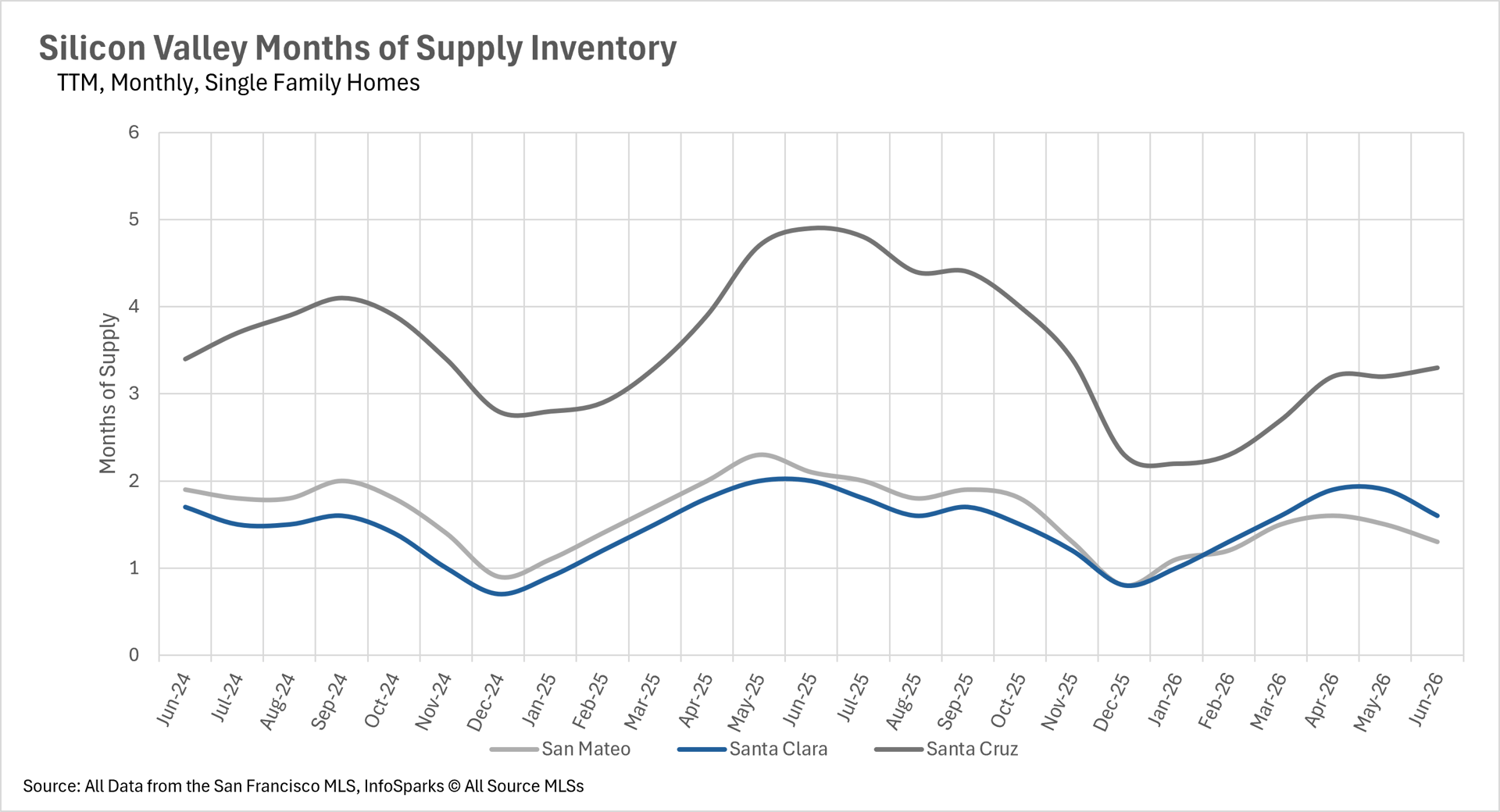
Months of Supply Inventory helps show how quickly available homes would sell at the current pace. Around three months of supply is generally considered balanced. Less than three months favors sellers, while more than three months gives buyers greater leverage.
Most Bay Area single-family home markets remain firmly seller-favored:
Santa Cruz, Sonoma, and Napa counties offer more balance, with Napa firmly in buyer’s-market territory at 6.8 months of supply.
Low months of supply continue to favor single-family home sellers in San Mateo and Santa Clara counties.
The condo market also presents more opportunities for buyers. Alameda, Contra Costa, Sonoma, Solano, and Napa counties each have more than four months of condo inventory, giving buyers more selection and potentially more negotiating power.
The Bay Area is not one single market. Property type, location, pricing, and preparation continue to make a significant difference.
For sellers, limited inventory creates opportunity—but strong results are not automatic. Buyers remain selective, and homes still need the right pricing, presentation, and marketing strategy.
For buyers, waiting for a dramatic market shift may not create better conditions, particularly in low-inventory single-family markets. However, the condo market and slower-moving counties may offer more flexibility, choice, and room to negotiate.
Stay up to date on the latest real estate trends.

October 22, 2026
What a Home Inspection Can and Cannot Tell You Before You Buy

October 21, 2026

October 15, 2026
October 8, 2026

October 1, 2026

September 24, 2026

September 22, 2026
September 22, 2026
A More Selective Market
September 17, 2026
You’ve got questions and we can’t wait to answer them.