The 5 Feet Around Your California Home May Matter More Than You Think
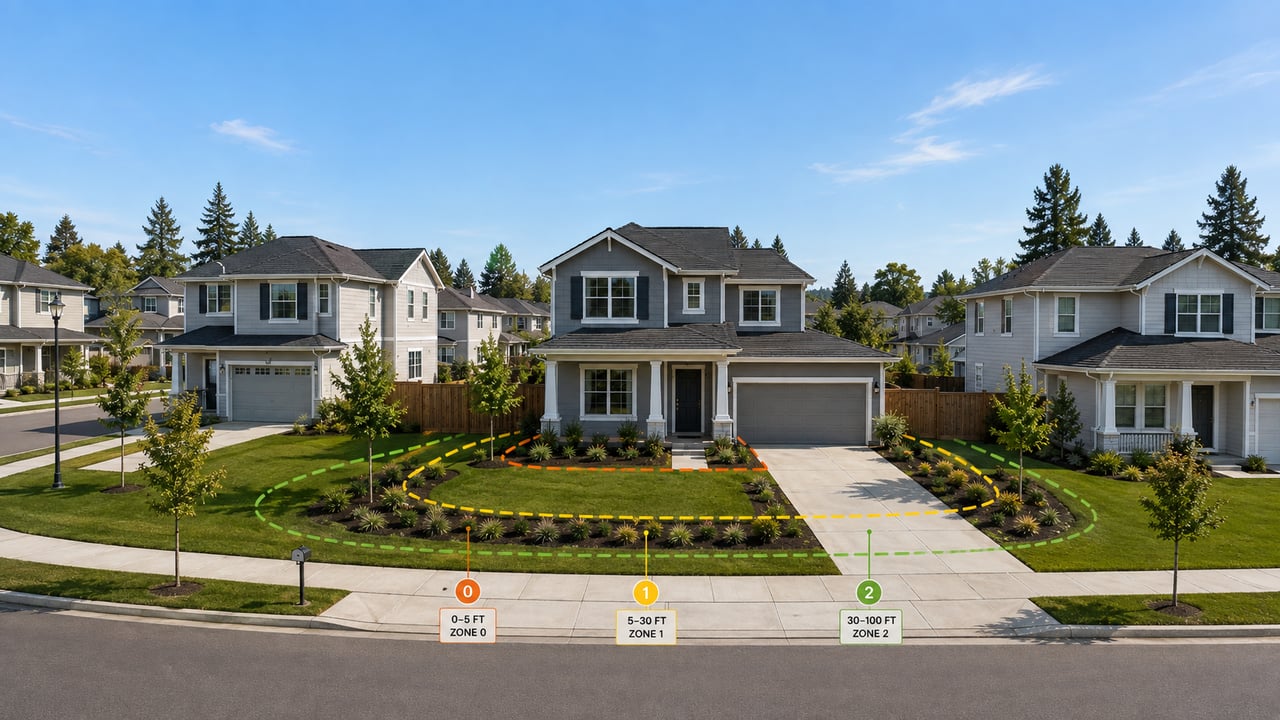
When most homeowners hear “defensible space,” they think about clearing brush farther out on the property. But one of the most important areas may be much closer:
the first five feet around your home.
That includes things like:
Why does this matter?
Because wildfire damage doesn’t only happen through direct flames. Wind-driven embers can travel ahead of a fire and land in exactly these kinds of places.
But that doesn’t mean removing every tree or turning your yard into gravel.
The goal is to reduce fuel and create separation.
A good place to start is simply walking around your home and asking:
What could catch an ember right next to the house?
Look at your gutters, roof, decks, fencing, landscaping and anything combustible stored near the structure.
This isn’t only a wildfire-preparation issue.
For some California properties in designated fire-hazard areas, defensible-space requirements and documentation can also come into play during a real estate sale.
That’s why we’d rather have a seller ask these questions before going into escrow:
Those are much easier questions to answer early than during a transaction.
Wildfire preparedness isn’t limited to remote mountain properties.
Homes in parts of Los Gatos, Monte Sereno, Saratoga, Cupertino and surrounding foothill areas may have different wildfire considerations depending on the exact property.
So don’t assume based on the city name alone.
Defensible space isn’t just about what’s happening 100 feet away. Sometimes the most overlooked details are the ones sitting right next to the house.
If you remember three things:
A little knowledge ahead of time can prevent a much bigger surprise later.
Stay up to date on the latest real estate trends.

October 21, 2026

October 15, 2026

October 8, 2026

October 1, 2026

September 24, 2026

September 22, 2026
September 22, 2026
A More Selective Market
September 17, 2026

September 15, 2026
You’ve got questions and we can’t wait to answer them.